Creative Chemistry - Kostenloses Hörbuch
1/17introduction
Creative Chemistry
FOOTNOTES:
FOOTNOTES:
[1] I am quoting mostly Unstead's figures from the Geographical Journal of 1913. See also Dickson's "The Distribution of Mankind," in Smithsonian Report, 1913.
[2] United States Abstract of Census of Manufactures, 1914, p. 34.
[3] United States Department of Agriculture, Bulletin No. 505.
| Transcriber's notes: Footnotes moved to end of book. The book starts using the word "CHAPTER" only after its chapter number XI. I have left it the same in this text. |
Über
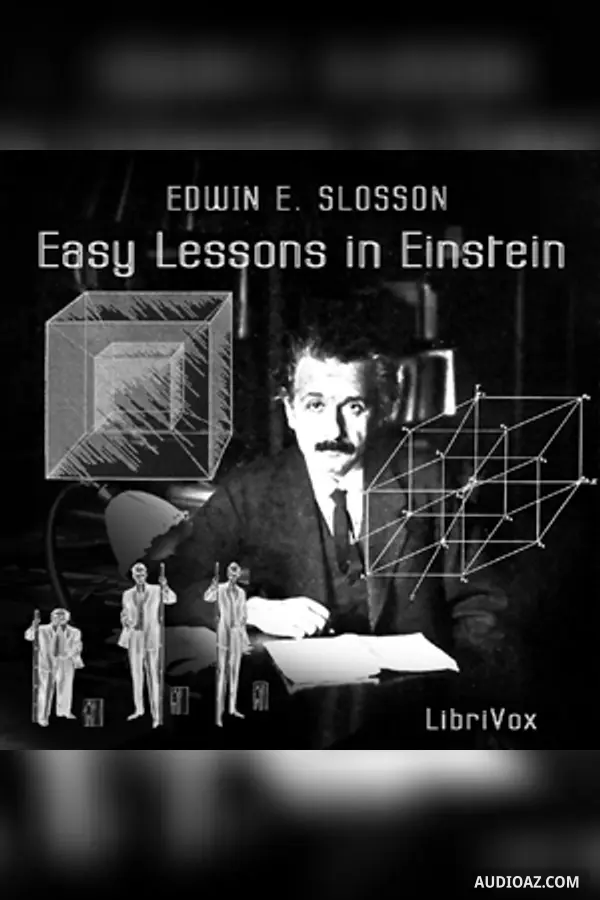
Slosson reviews the transformation of alchemistry from an obscure and imprecise practice to the science of chemistry. Along the way, he explains how the modern industrial world now relies on fertilizers, explosives, textile materials, polymers and metals.
By exploring the properties of a once undervalued element, the high strength of vanadium steel made the Ford car possible. Another element, cerium, appears in butane lighters and was once seen as a threat to the match industry in France.
In his chapter on oils, Slosson reviews the development of hydrogenated oils, especially during WWII, in the search for a way to reuse otherwise discarded components of corn and cottonseed. Through the revolutionary reaction of hydrogenation, waste materials became a stable product that wouldn't spoil when packaged or carried without refrigeration. Once thought of as a miracle, shoppers were once willing to pay more for fully hydrogenated oils than their natural, unsaturated forms. Only in recent years has evidence of health risks checked their popularity and given them the image of cheap, unhealthy fillers. (Summary by LivelyHive)
Kommentare
Seien Sie der Erste, der kommentiert
Es gibt noch keine Kommentare zu diesem Inhalt. Beginnen Sie die Diskussion!
Mehr entdecken