The Odyssey - Free Audiobook
1/24Book 01
The Odyssey
PREFACE TO SECOND EDITION
PREFACE TO SECOND EDITION
Butler’s Translation of the “Odyssey” appeared originally in 1900, and The Authoress of the Odyssey in 1897. In the preface to the new edition of “The Authoress”, which is published simultaneously with this new edition of the Translation, I have given some account of the genesis of the two books.
The size of the original page has been reduced so as to make both books uniform with Butler’s other works; and, fortunately, it has been possible, by using a smaller type, to get the same number of words into each page, so that the references remain good, and, with the exception of a few minor alterations and rearrangements now to be enumerated so far as they affect the Translation, the new editions are faithful reprints of the original editions, with misprints and obvious errors corrected—no attempt having been made to edit them or to bring them up to date.
(a) The Index has been revised.
(b) Owing to the reduction in the size of the page it has been necessary to shorten some of the headlines, and here advantage has been taken of various corrections of and additions to the headlines and shoulder-notes made by Butler in his own copies of the two books.
(c) For the most part each of the illustrations now occupies a page, whereas in the original editions they generally appeared two on the page. It has been necessary to reduce the plan of the House of Ulysses.
On page 153 of “The Authoress” Butler says: “No great poet would compare his hero to a paunch full of blood and fat, cooking before the fire (xx, 24-28).” This passage is not given in the abridged Story of the “Odyssey” at the beginning of the book, but in the Translation it occurs in these words:
“Thus he chided with his heart, and checked it into endurance, but he tossed about as one who turns a paunch full of blood and fat in front of a hot fire, doing it first on one side then on the other, that he may get it cooked as soon as possible; even so did he turn himself about from side to side, thinking all the time how, single-handed as he was, he should contrive to kill so large a body of men as the wicked suitors.”
It looks as though in the interval between the publication of “The Authoress” (1897) and of the Translation (1900) Butler had changed his mind; for in the first case the comparison is between Ulysses and a paunch full, etc., and in the second it is between Ulysses and a man who turns a paunch full, etc. The second comparison is perhaps one which a great poet might make.
In seeing the works through the press I have had the invaluable assistance of Mr. A. T. Bartholomew of the University Library, Cambridge, and of Mr. Donald S. Robertson, Fellow of Trinity College, Cambridge. To both these friends I give my most cordial thanks for the care and skill exercised by them. Mr. Robertson has found time for the labour of checking and correcting all the quotations from and references to the “Iliad” and “Odyssey,” and I believe that it could not have been better performed. It was, I know, a pleasure for him; and it would have been a pleasure also for Butler if he could have known that his work was being shepherded by the son of his old friend, Mr. H. R. Robertson, who more than half a century ago was a fellow-student with him at Cary’s School of Art in Streatham Street, Bloomsbury.
HENRY FESTING JONES.
120 MAIDA VALE, W.9.
4th December, 1921.
Summary
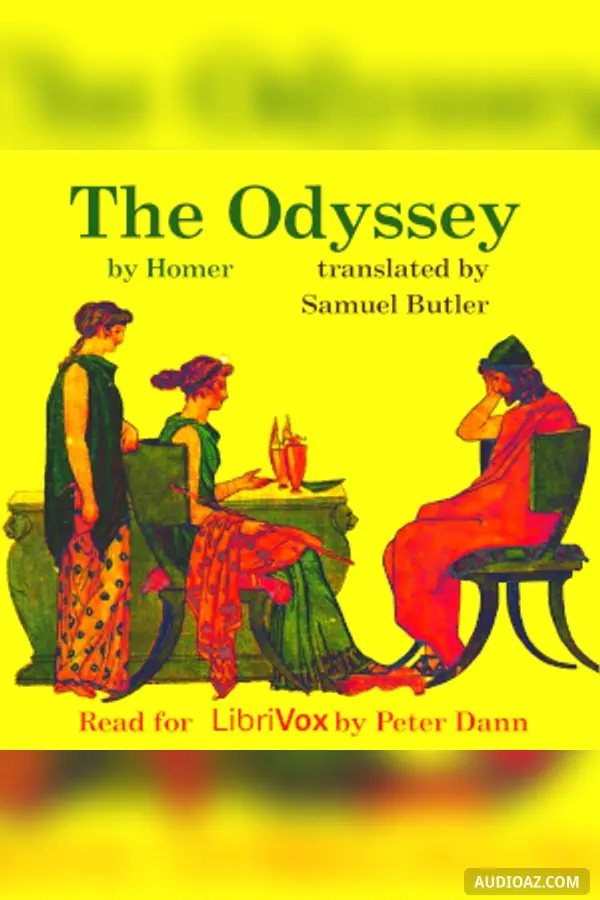
The Odyssey is an ancient Greek epic poem attributed to Homer, generally thought to have been composed in the late eighth or seventh century BC. It is the companion to the Iliad and picks up the story of the Greek heroes after the fall of Troy, following one of them, Odysseus, king of the island of Ithaca, on his ten-year struggle to return home.
The poem is divided into twenty-four books and does not begin at the beginning. It opens in Ithaca, where Odysseus has been gone so long that a crowd of suitors has moved into his palace, eating his stores and pressing his wife Penelope to remarry. Their son Telemachus sets out to find news of his father. Only then does the poem turn to Odysseus himself, who recounts his adventures among strange peoples and monsters, including the Cyclops, the enchantress Circe, the Sirens and the journey to the land of the dead. Throughout, the gods take sides, with Athena as his steady ally and Poseidon as his enemy.
Originally a work of oral performance, the Odyssey still works naturally as something heard rather than read. Its themes of homecoming, loyalty, hospitality and cunning have shaped Western storytelling ever since, and it suits anyone who enjoys mythology, adventure or the roots of literature.
About
The Odyssey is one of the two major ancient Greek epic poems (the other being the Iliad), attributed to the poet Homer. The poem is commonly dated to between 800 and 600 BC. The poem is, in part, a sequel to the Iliad, and concerns the events that befall the Greek hero Odysseus in his long journey back to his native land Ithaca after the fall of Troy.
It takes Odysseus ten years to return to his native land of Ithaca after ten years of war; during his 20-year absence, his son Telemachus and his wife Penelope must deal with a group of unruly suitors who have moved into Odysseus' home to compete for Penelope's hand in marriage, since most have assumed that Odysseus has died.
The poem is a fundamental text in the Western canon and continues to be read in both Homeric Greek and translations around the world. (Summary from Wikipedia)
Other versions of The Odyssey
- The Odyssey (Book 6) — narrated by multiple narrators · Greek
- The Odyssey (Version 4) — narrated by Peter Dann · English
- The Odyssey (Version 3) — narrated by Mark Nelson · English
Comments

Peak fiction 🙏
Discover More

More from Homer